Woodworking is one of those crafts that people think about for years before actually starting. The mental image of a fully equipped professional workshop — expensive machinery, massive dust collection systems, walls lined with specialty tools — makes the whole thing feel financially out of reach. So the idea stays on the list, never quite getting started.
The reality is very different. Thousands of hobbyists and DIY enthusiasts set up functional, productive home workshops on modest budgets every year. The key is knowing what you actually need versus what looks impressive in a YouTube setup tour. Most beginners need far less than they think, and the projects that teach the most foundational skills can be done with a surprisingly short list of tools.
This guide walks you through everything you need to know to start woodworking at home without overspending — and at the end, takes an honest look at one resource that has helped a significant number of beginners shortcut the learning curve considerably.
Why Most Beginners Stall Before They Ever Start
The single biggest barrier to starting woodworking is not money, space, or skill. It is information overload. Search for beginner woodworking advice online and you will quickly find yourself buried in conflicting opinions about which saw to buy first, whether you need a table saw before anything else, what thickness of wood is best for beginners, and a hundred other debates that feel critical before you have made a single cut.
Most of this complexity is manufactured by enthusiasts who have been at the hobby for years and genuinely cannot remember what it felt like to start from nothing. The result is that beginners absorb a sense that woodworking requires extensive investment and knowledge before you can produce anything worthwhile. That is simply not true.
The Myth of the "Proper" Workshop
The idea that you need a large dedicated workshop space to do meaningful woodworking stops more people than any other factor. In reality, many of the most satisfying beginner and intermediate projects can be built in a garage corner, a patio, or even a spare room when proper dust management is in place. Space is a constraint to work around, not a barrier to entry.
Similarly, the idea that you need to spend several thousand dollars on tools before you can get started is largely a myth propagated by reviews of high-end setups. A beginner can build functional, attractive projects with under $300 in hand and power tools if they are strategic about which tools they buy first.
“The woodworkers who make the most progress are not the ones with the best tools. They are the ones who started building things before they felt ready.”
The Woodcraft Journal — Workshop ObservationsThe Essential Starter Tool List (And What to Skip)
One of the most valuable things a new woodworker can learn is the difference between tools that are genuinely foundational and tools that are nice to have once you have developed your direction. The following categories represent the minimum viable toolkit for a productive beginner workshop.
Buy used where it makes sense. Circular saws, drills, and sanders from trusted brands hold up well secondhand. Check Facebook Marketplace and estate sales before buying new.
Avoid cheap no-name versions of precision tools. A budget square that is not actually square will cause problems across every project you build. Invest a little more here.
Skip specialty tools until you need them. Routers, biscuit joiners, and band saws have their place, but none of them are necessary until you have specific projects that require them.
Setting Up a Home Workshop on a Budget
Your workshop does not need to look like a magazine photo. It needs to be safe, functional, and organized enough that you can find your tools and work without constantly fighting your environment. Here is a practical approach to setting one up without spending more than necessary.
Define Your Space and Commit to It
A single parking space in a garage (roughly 10 x 20 feet) is more than enough for most beginner projects. A dedicated space matters more than a large one — being able to leave projects mid-progress without breaking everything down saves enormous time.
Build or Buy a Solid Workbench First
A sturdy, flat work surface is the foundation of every project you will ever build. A simple torsion box workbench can be built for under $80 in lumber and hardware. Do this before spending on tools.
Address Dust Before You Need To
Sawdust accumulates faster than most beginners expect. A shop vacuum with a dust separator (often called a cyclone lid) handles 90% of cleanup needs at a fraction of the cost of a dedicated dust collector.
Organize Tools So You Can Find Them
French cleats on a wall section allow you to hang tools in any configuration and reorganize easily as your shop evolves. The materials cost under $30 and it is a better starting storage system than anything you can buy premade.
Learn Basic Safety Before the First Cut
Eye protection, hearing protection, and understanding how each tool behaves takes thirty minutes to learn and matters far more than any advanced technique. Take it seriously from the start.
The Best First Projects for Beginners (And Why Plans Matter)
One of the most consistent pieces of advice from experienced woodworkers to beginners is this: build from plans, not from your imagination, until you understand how wood behaves. This is not about lack of creativity. It is about understanding that wood moves, that grain direction matters, that tolerances are unforgiving, and that learning all of this from a project that goes wrong is far more educational when you had a clear reference point.
Good beginner projects share several characteristics: they use primarily rectangular cuts (which a circular saw handles well), they involve joinery techniques that are forgiving for beginners (pocket holes, simple butt joints), and they produce something useful enough that you actually want to finish them.
- A simple step stool — teaches basic joinery, dimensioning, and finishing; functional immediately
- A floating wall shelf — introduces wall mounting, level work, and clean finishing on a small scale
- A basic side table or end table — introduces four-leg construction, which is the foundation of most furniture
- A small storage box or keepsake box — introduces lid-making, hinges, and detailed finishing at a manageable scale
- A simple planter box — outdoor finishing techniques, waterproofing, and a project with room for imperfection since it goes outside
The missing piece for most beginners is access to high-quality, clearly drawn plans that specify exact dimensions, cutting lists, joinery details, and finishing notes. This is where the gap between knowing woodworking basics and actually building projects well tends to appear. Good plans eliminate guesswork and allow you to focus your energy on the craft rather than on problem-solving avoidable issues.
Where to Find Woodworking Plans: An Honest Comparison
For beginners trying to find reliable woodworking plans, the landscape ranges from completely free but unreliable to expensive but comprehensive. Here is how the main options compare:
| Source | What You Get | Honest Assessment |
|---|---|---|
| Free plans online (Pinterest, blogs) | Scattered individual projects, often with incomplete dimensions | Inconsistent quality; frequently missing cutting lists or hardware specs; unreliable for beginners |
| YouTube tutorials | Visual instruction, some plans in description | Great for technique; rarely provides complete, downloadable plans with precise measurements |
| Woodworking magazines | Well-tested plans, professional presentation | Good quality; limited selection per issue; subscription adds up; not always beginner-focused |
| In-person classes or workshops | Hands-on instruction, guided projects | Excellent learning environment; expensive, location-dependent, limited schedule flexibility |
| Large curated plan libraries | Thousands of complete plans across all categories and skill levels | Best value for consistent builders; works best when plans are professionally drawn and organized by skill level |
For beginners who want to build consistently — and especially for those who want to eventually build projects they can sell or give as gifts — access to a large, well-organized library of complete plans is one of the highest-value resources available. It eliminates the planning phase entirely and allows you to focus on actually building.
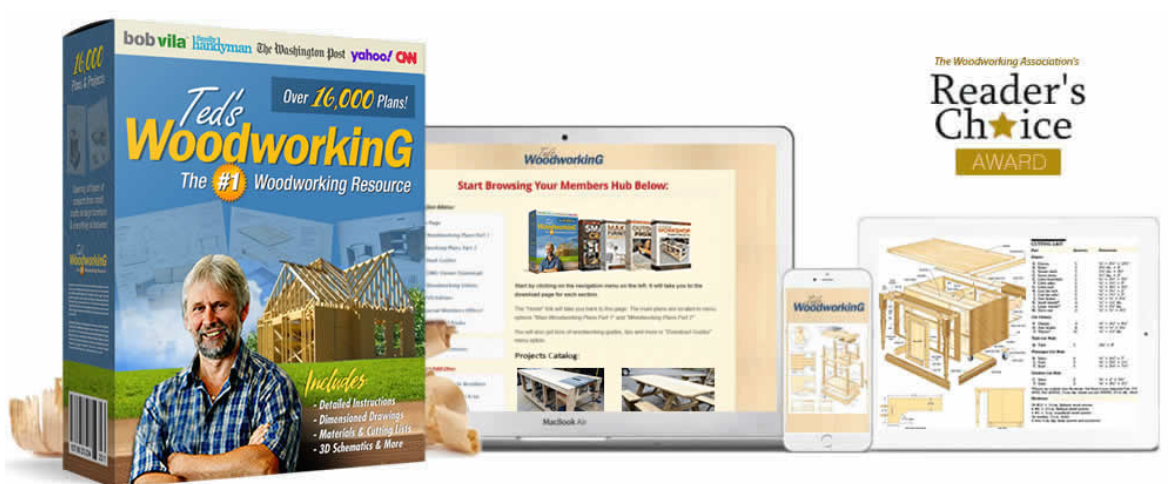
Ted's Woodworking is one of the largest commercially available collections of woodworking plans, containing over 16,000 projects across virtually every category of woodworking — from beginner furniture and outdoor structures to advanced cabinetry and shop fixtures. Below is an honest look at what the collection includes, who benefits most from it, and where its realistic limitations lie.
Ted’s Woodworking Plans Review: What You Actually Get
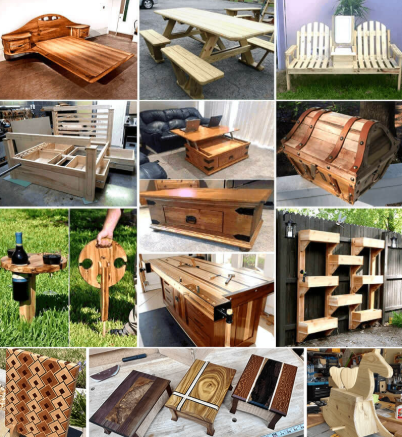
Ted's Woodworking was compiled by Ted McGrath, a certified woodworking teacher and professional woodworker with a background in training beginners. The collection grew from his observation that the biggest bottleneck for most woodworking students was not technique — it was access to plans that were complete enough to actually follow without supplementary research.
The result is a library structured around completeness. Each plan in the collection is designed to be self-contained: you get exact measurements, a full materials and cut list, hardware specifications, step-by-step assembly instructions, and finishing notes — everything you need to build the project from raw lumber to finished piece without referencing anything else.
What the Collection Covers
Furniture & Home
Tables, chairs, beds, bookshelves, cabinets, dressers, and storage pieces across all skill levels
Outdoor Projects
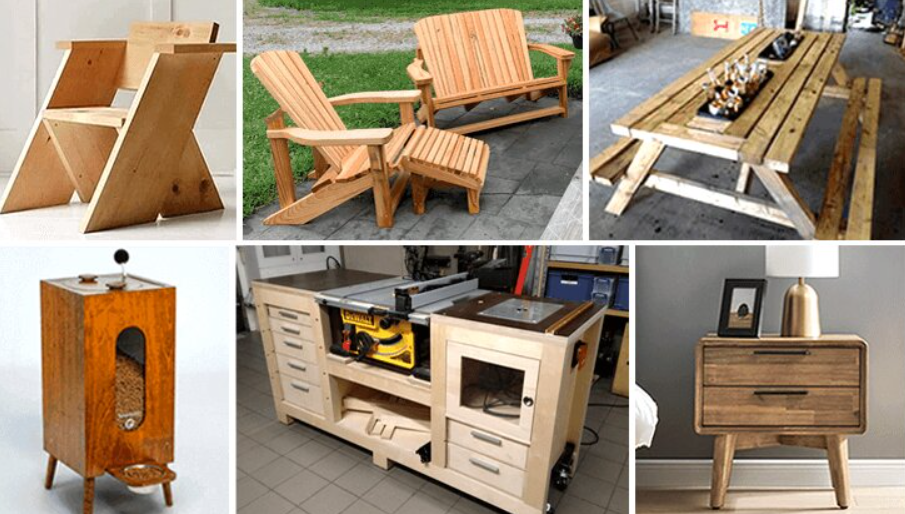
Garden benches, pergolas, planter boxes, Adirondack chairs, sheds, and deck structures
Workshop & Shop Furniture
Workbenches, tool storage, clamp racks, router tables, and assembly tables
Gifts & Crafts
Keepsake boxes, toys, decorative items, frames, and smaller projects suitable for giving or selling
DWG & CAD Files
Computer-readable design files included for projects where precise digital dimensions are useful
Bonus Training Material
Woodworking guides on reading plans, material selection, joinery, and finishing techniques
Who Gets the Most Value From It
The collection works best for builders who want to stay consistently productive — who always have a next project ready rather than spending time hunting for plans between builds. For beginners specifically, having a large library of clearly graded projects means you can start with genuinely beginner-appropriate builds and progress naturally without hitting a ceiling on available plans.
It is also a strong resource for people who want to build things they can sell. The variety of small, craft-oriented projects and practical furniture pieces gives sellers a broad range of options without having to search for and evaluate plans individually.

What the Collection Does Well
- Sheer volume means you rarely run out of project options
- Complete plans with cut lists, materials, and hardware specs
- Organized by project type and difficulty level
- Includes training material useful for genuine beginners
- One-time purchase with permanent access
- DWG files included for those with CNC or design software
Limitations Worth Knowing
- Plan quality is inconsistent across the library — some are excellent, some are dated
- 16,000 plans creates its own discovery problem; browsing takes time
- Not a teaching program — it provides plans, not instruction in technique
- Supplementary video instruction would benefit complete beginners
What Woodworkers Are Saying About the Collection
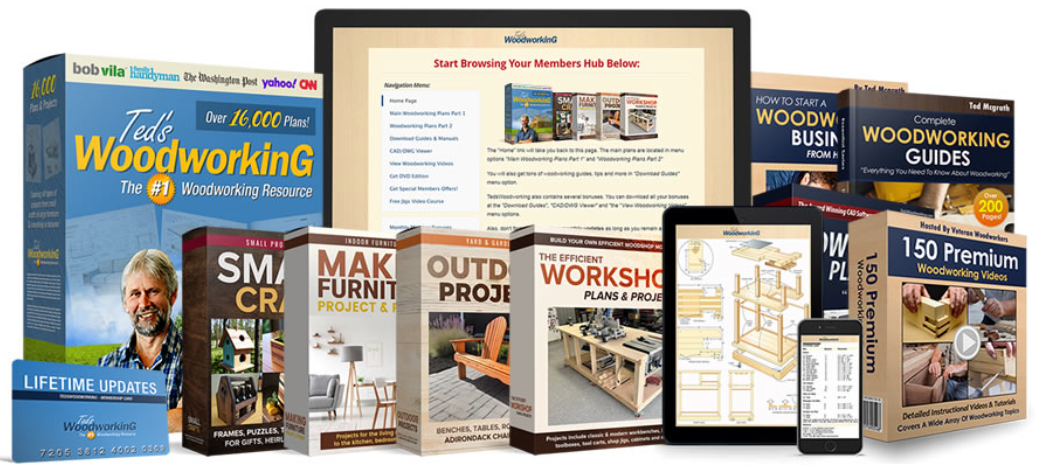
We reviewed publicly available feedback from people who have used Ted's Woodworking Plans collection across different experience levels. The recurring themes across beginners, intermediate builders, and hobbyists who sell their work are fairly consistent:
I had been wanting to start woodworking for two years but kept getting stuck on what to actually build first. Having access to this many beginner plans eliminated that problem entirely. I built my first three projects within the first month of getting it.
Beginner Woodworker — User Feedback
I started using it specifically for the small craft and gift projects, and it has been the best investment in my workshop in years. The cutting lists alone save me hours of planning time per project.
Hobbyist Who Sells at Markets — User Feedback
Quality is not uniform across all 16,000 plans, but the ones I have used — probably 30 or 40 projects — have been solid. The outdoor furniture plans especially have been well-thought-out and accurate on measurements.
Intermediate Builder — User Feedback
I use it as a reference library more than anything. When a client asks me for something I have not built before, I check here first. More often than not there is a plan that is either exactly right or close enough to adapt. Worth every penny for that alone.
Part-Time Professional Woodworker — User Feedback
Testimonials reflect general themes from publicly available user feedback. Individual experiences vary based on skill level, project selection, and effort applied.
Final Assessment: Is Ted’s Woodworking Plans Worth It for Beginners?
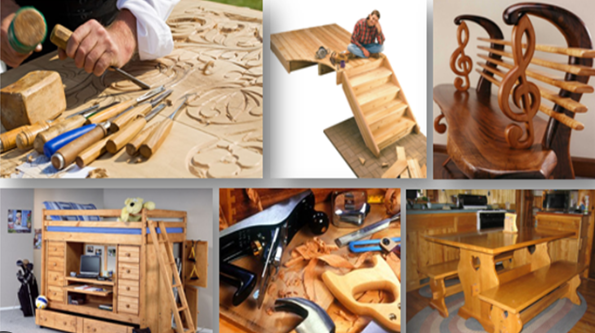
Starting woodworking at home is genuinely accessible on a modest budget. The barriers most people imagine — expensive tools, large dedicated space, years of training before you can produce anything worthwhile — are largely overstated. What most beginners actually need is clear direction: a solid tool starter list, a functional workspace setup, and a source of complete, reliable project plans they can build from immediately.
Ted's Woodworking Plans addresses the last of those needs well. For a builder who is committed to staying productive and building consistently, a library of over 16,000 complete plans eliminates the planning overhead that derails many beginners. The completeness of the plans — with full cut lists, materials, and hardware specs — is what makes the collection genuinely useful rather than just voluminous.
It is not a substitute for learning technique. You will still need to watch instructional content, learn how your tools behave, and develop the feel for wood that only comes from building projects. But for the planning and project selection side of the equation, this collection covers more ground than most beginners will ever exhaust.
“The fastest path from ‘I want to try woodworking’ to actually building things is having a complete plan in hand before you walk into the shop.”
The Woodcraft JournalTed McGrath walks through the collection in a free presentation on the website — including an overview of how the plans are organized, examples of beginner-appropriate projects, and what the complete package includes. If you are at the stage of deciding whether woodworking is something you want to invest time and money in, that presentation is the clearest way to evaluate whether this resource fits where you are.
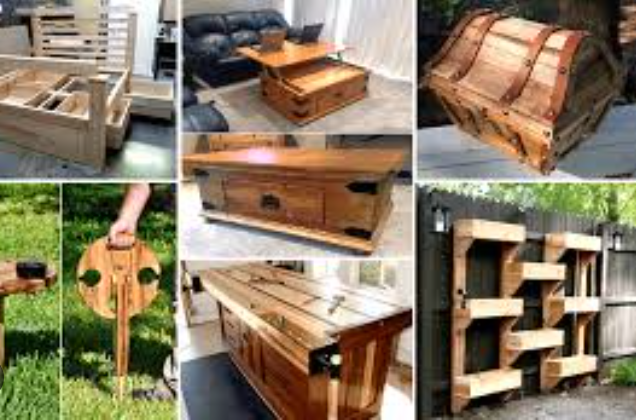
Over 16,000 Plans Ready to Build From Today
Ted McGrath walks through the complete collection in a free presentation — covering how the plans are organized, what skill levels are included, and how to get started immediately. No purchase needed to watch.
Watch the Free Presentation ↗ Free to watch — no commitment required